
Same Day Emergency Appointments Available!

Dental Implants vs. Dentures in Union, NJ
Union, NJ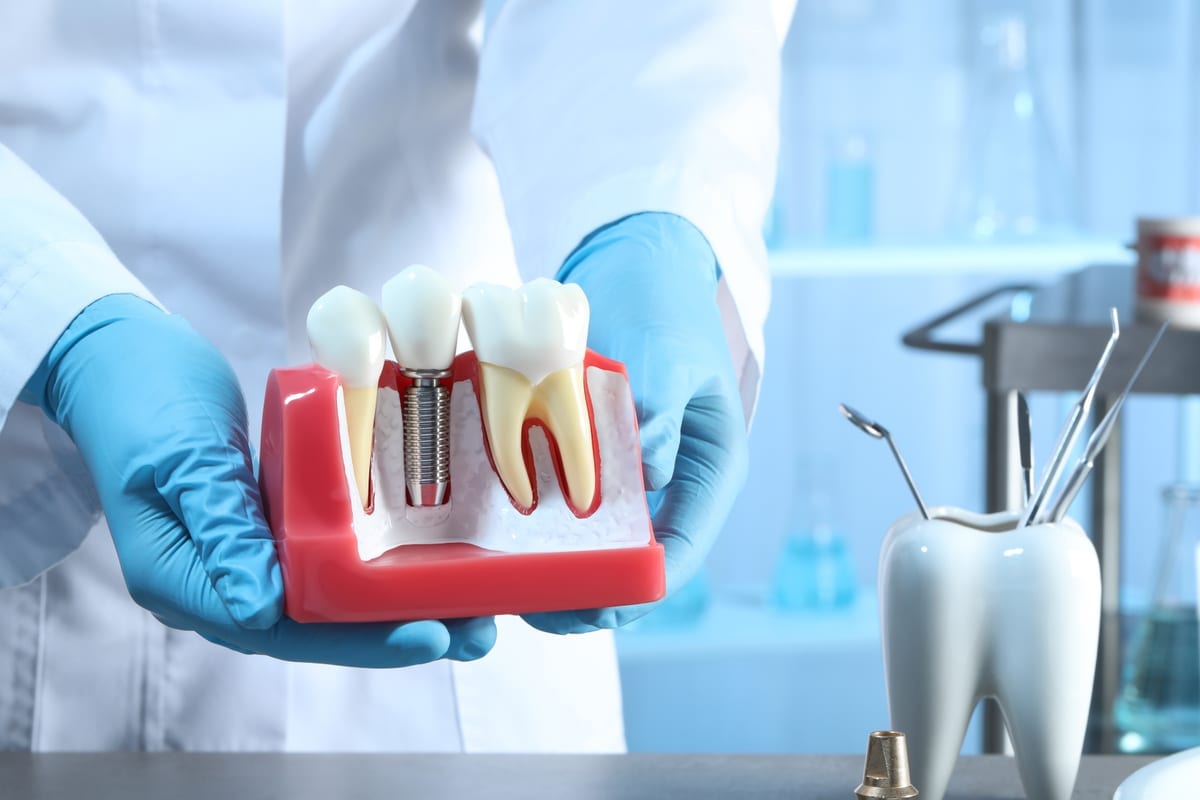
Choosing how to replace missing teeth is one of the biggest decisions you can make for your oral health. Dental implants vs. dentures — which option is actually right for you in Union? It depends on your health, your lifestyle, and your long-term goals. At Duo Dental Group Union, Dr. Richard Mullin helps patients weigh every factor before making a choice.
This guide walks you through both options honestly. We’ll also touch on dental bridges as a third alternative. Our goal is to help you feel confident — not confused — when you sit down for your consultation.
Understanding Your Tooth Replacement Options in Union
Before comparing options, it helps to understand what each one actually involves. Dental implants are titanium posts surgically placed into your jawbone. They act as artificial tooth roots and support a crown, bridge, or full arch of teeth on top.
Dentures are removable appliances that sit on top of your gums. They come in full dentures for patients missing all teeth, or partial dentures for patients missing several. Bridges are a third option. They use neighboring teeth as anchors to hold one or more artificial teeth in place.
Each approach has real advantages and real limitations. The right choice depends on your unique situation — not a one-size-fits-all recommendation.
Dental Implants vs. Dentures: Comparing the Key Differences
Let’s look at how these two main options stack up side by side. This is often the comparison patients in Union ask about most.
- Stability: Implants are fixed in the jaw and do not move. Dentures can shift during eating or speaking.
- Bone health: Implants stimulate the jawbone and prevent bone loss. Dentures do not provide this stimulation.
- Maintenance: Implants are cleaned just like natural teeth. Dentures require nightly removal and soaking.
- Longevity: Implants can last a lifetime with proper care. Dentures typically need replacement every 5–10 years.
- Upfront cost: Implants have a higher initial investment. Dentures are generally less expensive to start.
- Candidacy: Implants require healthy bone and gums. Dentures work even when bone density is low.
Neither option is objectively better. They simply serve different patient needs. Dr. Mullin evaluates each case individually to give you a clear, honest recommendation.
Who Makes the Best Candidate for Dental Implants?
Dental implants work best for patients with a solid foundation. Here is what typically makes someone a strong candidate.
- Good jawbone density to support the titanium post
- Healthy gum tissue free of active Periodontal Disease Treatment Gum Disease
- No uncontrolled chronic conditions that slow healing
- A commitment to long-term oral hygiene habits
- Non-smoker or willingness to quit before treatment
If gum disease is present, it must be treated before implant placement. Untreated gum disease is one of the leading causes of implant failure. Dr. Mullin addresses this at the very start of your treatment plan.
Age is rarely a barrier for implants. Healthy adults of almost any age can be strong candidates. Even younger patients who lost a tooth due to injury often benefit greatly from implants.
When Dentures Might Be the Smarter Choice
Dentures remain an excellent solution for many patients. There are situations where they clearly make more sense than implants.
If you have experienced significant bone loss, implants may require a bone graft first. That adds time and cost to your treatment. For some patients, dentures offer a faster and more straightforward path to a restored smile.
Dentures are also the right call when a patient is missing all of their upper or lower teeth and needs a full-arch solution quickly. Modern dentures look far more natural than older designs. Many patients in Union are pleasantly surprised by how comfortable and realistic today’s dentures feel.
It is also worth noting that implant-supported dentures offer a middle ground. These dentures snap onto two to four implants for added stability. You get more security than traditional dentures without the full cost of individual implants for every tooth.
What About Dental Bridges?
Bridges are worth mentioning in the implants vs. dentures conversation. A dental bridge can replace one to three missing teeth without surgery. It is a fixed restoration, meaning it stays in your mouth permanently.
However, bridges require grinding down the healthy teeth on either side of the gap. Those teeth serve as anchor points. This means otherwise healthy tooth structure is sacrificed as part of the process.
Implants avoid this trade-off entirely. They stand alone without affecting neighboring teeth. For patients with healthy adjacent teeth, implants are often the more conservative long-term choice.
If the neighboring teeth already have large fillings or crowns, a bridge may make more clinical sense. Dr. Mullin reviews your full mouth health before recommending any path forward.
How Dr. Richard Mullin Approaches the Decision at Duo Dental Group Union
Every patient who walks into Duo Dental Group Union gets a personalized evaluation. Dr. Mullin does not push one solution over another. He reviews your X-rays, examines your gum health, discusses your goals, and explains every option clearly.
Patients with children or families also appreciate that our practice offers Pediatric Dentistry services. You can address the whole family’s dental needs under one roof in Union. That kind of continuity of care matters to many of our patients.
The consultation is a conversation, not a sales pitch. You will leave understanding exactly what your mouth needs and why. That clarity helps patients make decisions they feel good about for years to come.
Conclusion: Making the Right Call for Your Smile
There is no single right answer in the dental implants vs. dentures debate. Implants offer permanence, bone preservation, and a natural feel. Dentures provide accessibility and affordability when implants are not an option. Bridges serve a specific role when only a few teeth need replacement.
The best path forward always starts with a professional evaluation. Dr. Richard Mullin and the team at Duo Dental Group Union are here to guide you through that process with honesty and care. Book Now to schedule your appointment with our team.
Frequently Asked Questions
How long do dental implants last compared to dentures?
Dental implants can last a lifetime with proper care and good oral hygiene. Dentures typically need to be replaced every 5 to 10 years as the shape of your gums and jawbone changes over time.
Can I get dental implants if I have been wearing dentures for years?
Possibly, but long-term denture wear often leads to bone loss in the jaw. Dr. Mullin will take X-rays to assess your bone density. A bone graft may be needed before implants can be placed. In some cases, implant-supported dentures offer a great middle-ground solution.
Are dental implants painful to get?
Most patients report less discomfort than expected. The procedure is done under local anesthesia, and post-operative soreness is manageable with over-the-counter pain relief. Dr. Mullin walks every patient through what to expect before, during, and after the procedure.
What is the difference between traditional dentures and implant-supported dentures?
Traditional dentures rest on the gums and can shift or slip during normal activities. Implant-supported dentures attach to two to four implants placed in the jaw, providing significantly more stability and comfort during eating and speaking.
How do I know if I am a candidate for dental implants in Union, NJ?
The best way to find out is through a consultation with Dr. Richard Mullin at Duo Dental Group Union. He will evaluate your bone density, gum health, and overall oral health to determine if implants are the right fit for your situation.

New Patients & Emergency Appointments Welcome!