
Same Day Emergency Appointments Available!

Why Dental Crowns Are Essential for Safeguarding Weak Teeth
Union, NJ
The importance of teeth primarily lies in their function and aesthetics, but they also play a significant role in proper reflection and articulation. A tooth is a beautifully designed structure with an outer shell of enamel, dentin, and pulp in the center. Fortunately, dental crowns can efficiently strengthen and protect weakened or damaged teeth. These are made for the teeth that cover the whole tooth, even its shape and strength, along with aesthetics.
When teeth weaken, it is important to prevent further complications. If you have a compromised tooth that may not function properly, dental crowns can provide support. In this blog, we will dive a bit deeper into why crowns are paramount to protecting your weak teeth and how they can help preserve your oral hygiene.
What Are Dental Crowns?
A dental crown is a cap or covering that fits over your damaged or weakened tooth. Crowns are generally made of long-lasting materials such as porcelain, ceramic, or metal. They are patterned after the natural shape and size of your tooth, allowing it to blend in perfectly with the rest of your dental structure. Crowns are used when a tooth is too damaged to support a filling but healthy enough to save.
Dental crowns are custom-designed and crafted to fit perfectly over your tooth, providing both functional and aesthetic solutions. This process entails and includes removing the damaged or decayed portion of the tooth and shaping it to provide a secure foundation for your crown. Once placed, the crown restores the tooth’s strength and appearance, making it fully functional again.
When Are Dental Crowns Necessary?
Here are some circumstances in which you may need dental crowns to support and reinforce a weakened tooth. There are a wide variety of common reasons you might need to get a crown, including:
- Severe Decay: In cases where decay or damage is so severe that a regular filling will not do, a dentist may fit the tooth with a crown in order to restore its shape.
- Cracked or Broken Teeth: If you have a cracked or broken tooth as a result of trauma or from excessive wear, a crown can help to protect the tooth.
- Crown After Root Canal: Many people who undergo root canal treatment have a crown placed on the tooth to seal it and help prevent it from becoming brittle or fracturing.
- Worn Down Teeth: Teeth that have been worn down by grinding or other habits may benefit from a crown to restore shape and strength.
How Dental Crowns Help People With Weak Teeth
There are many reasons why teeth may become weak. Due to deep decay, wear and tear, or physical trauma, a tooth may lose structural integrity and be in danger of further damage. Dental crowns are used to strengthen these weak teeth and prevent more serious problems.
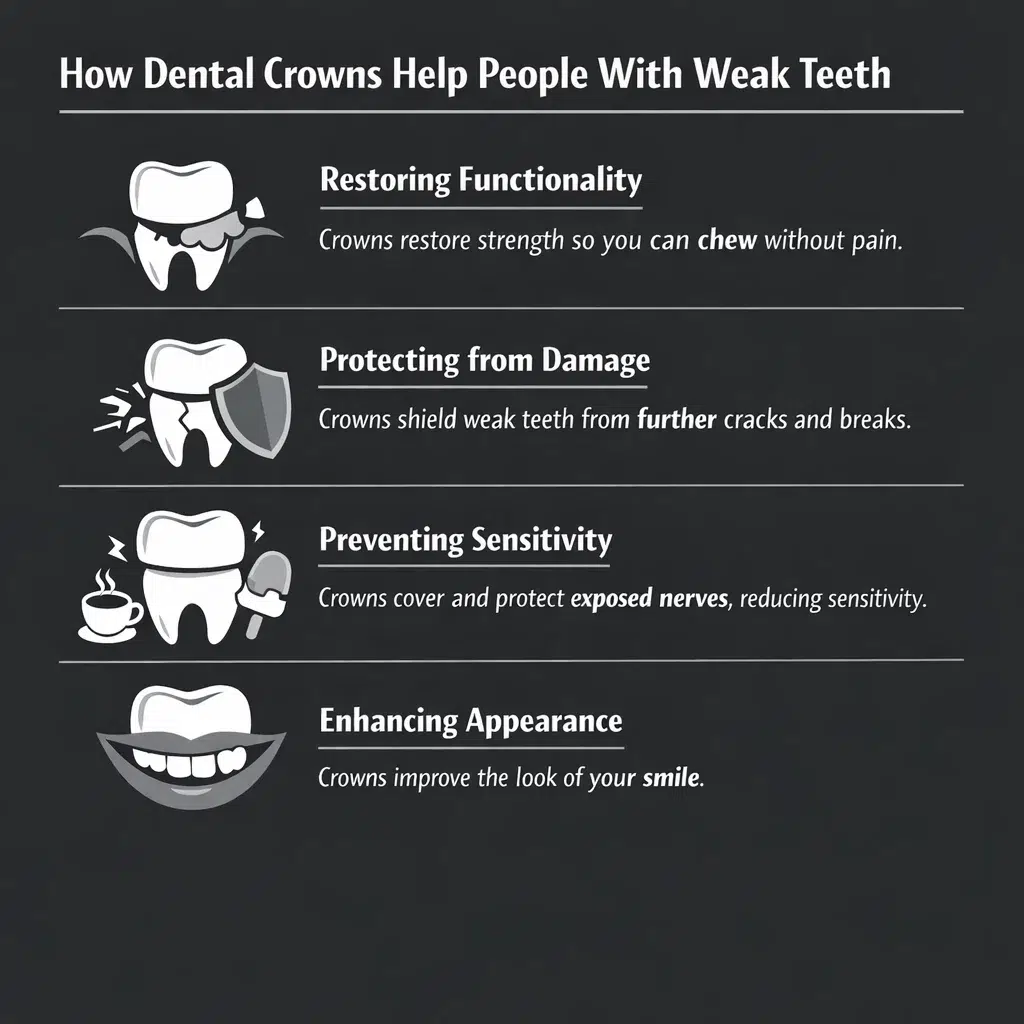
- Restoration of Functionality: The main reason dental crowns are used is to restore functionality in a weakened tooth. When a tooth is broken, it can start to hurt or become difficult to chew. Crowns give added strength so you can bite and chew normally without pain.
- Protection from Further Damage: A compromised tooth becomes vulnerable to breaking or cracking under the strain of biting or chewing. A dental crown can be thought of as a protective cover that helps keep the tooth from becoming further fractured or damaged. That helps prevent additional procedures, such as tooth extraction, if the tooth is so damaged that it cannot be repaired.
- Preventing Tooth Sensitivity: Sensitive teeth are often due to exposed tooth roots or wide cavities that expand when consuming hot or cold foods. A dental crown protects the tooth, sealing it from external elements and reducing sensitivity. This can improve your overall comfort and make life more enjoyable.
- Enhancing Aesthetic Appeal: A broken tooth can be unsightly, especially if it is located in a highly visible area of your mouth. Dental crowns are customized to match your natural teeth in color and shape, improving the aesthetic appearance of your smile. Porcelain and ceramic crowns are designed to blend seamlessly with your natural teeth, offering a beautiful, natural-looking smile.
The Dental Crown Process
Getting a dental crown usually occurs in the following way:
- Consultation and Examination: The dentist will examine your tooth and decide whether to place a crown. This could include using X-rays to assess the extent of the damage.
- Tooth Preparation: The decayed part of the tooth is removed, and the tooth is shaped to provide a solid foundation for the crown.
- Impression: Your dentist will create an impression of the tooth to design a custom crown that fits perfectly. You may receive a temporary crown while the permanent one is being manufactured.
- Placing the Crown: When the permanent crown is prepared, it will be positioned over your tooth and adjusted for comfort and fit. Once sure that it’s secure and well placed, the crown is bonded to the tooth.
Dental Crowns Aftercare
It is very important to take proper care of your dental crown to help it last longer and maintain good oral health. Dental crowns are strong, but by following a few aftercare tips, you can ensure they remain in good condition and avoid any problems.
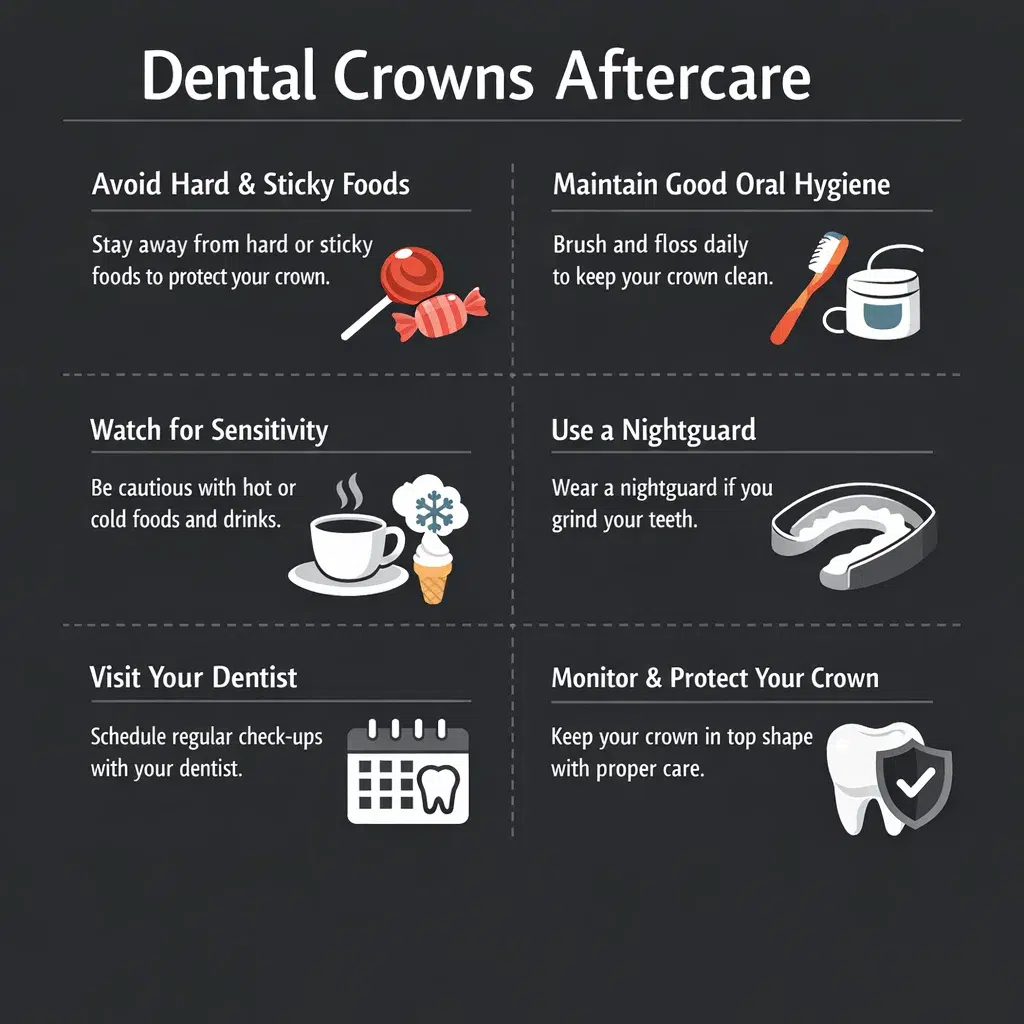
- Avoid Hard or Sticky Foods: Avoid hard, sticky/chewy foods for the first few days after getting your crown to prevent excess pressure on it.
- Practice Good Oral Hygiene: Make sure to brush and floss around the crown consistently to avoid plaque build-up. Use a soft-bristled toothbrush and don’t floss directly around the crown’s edge so that you don’t damage it.
- Be Cautious with Temperature Sensitivity: If you find that you become sensitive to hot and/or cold temperatures, it is typically a temporary issue. If it continues, contact your dentist to make sure everything is sealed up properly.
- Wear a Mouthguard if Necessary: If you grind your teeth while asleep, wearing a nightguard can protect your crown from abrasion and potential damage.
- Visit Your Dentist: Regular visits to your dentist will help keep your crown healthy and fix any problems before they escalate.
By following these simple aftercare tips, you can engage with your dental crown for years to come!
Protect Your Smile with Dental Crowns
Dental crowns are the perfect solution for restoring a weakened or damaged tooth to strength and functionality. Veneers also improve the aesthetics of your smile while protecting your tooth enamel from further damage, giving them dual benefits!
Duo Dental Group Union is your partner in preventing periodontal disease. If you’re struggling with tooth decay or tooth loss, our team can help you find the best solution. Call us today, schedule an appointment to regain your smile with customized dental crowns.
Questions People Ask About Dental Crowns
What are dental crowns made from?
Dental crowns can be made from various materials, including porcelain, ceramic, and metal. Porcelain and ceramic crowns are popular for their natural look, while metal crowns are more durable.
Can dental crowns be placed on front teeth?
Yes, dental crowns can be placed on front teeth. Porcelain or ceramic crowns are often used for front teeth due to their ability to match the natural color of your teeth.
How do I care for a dental crown?
Caring for a dental crown involves brushing and flossing regularly, avoiding sticky or hard foods, and visiting your dentist for regular check-ups. Crowns should be treated like natural teeth.
Can a dental crown be replaced?
Yes, dental crowns can be replaced if they become damaged or worn out. Your dentist will assess the condition of the crown and recommend a replacement if necessary.
Related Articles
New Patients & Emergency Appointments Welcome!