
Same Day Emergency Appointments Available!

How Dental Implants Prevent Bone Loss and Help Maintain Your Facial Structure
Union, NJ
A tooth falling out is more than a cosmetic issue. Tooth loss not only affects the function and appearance of your smile, but it also threatens the health of the bone around and supporting your teeth. Jawbone depends on the stimulation from your teeth to stay dense and strong. Without that stimulation, the bone starts to break down, which can lead to changes in your facial structure. The good news is that dental implants effectively prevent bone loss and restore function and aesthetics.
In this blog, we will touch upon how dental implants work to help preserve your jawbone and facial structure, as well as improve your overall dental health in the long run. If you’re interested in restoring your smile with dental implants, it’s important to understand the process and long-term benefits they offer. So, let’s explore how dental implants in Union can assist you.
The Role of Jawbone Stimulation in Facial Structure
Teeth do more than chew and allow you to speak; they also provide stimulation of the bone below. This stimulation is necessary to maintain the jawbone’s health and density. When a tooth is lost, the bone that previously supported it begins to weaken and resorb, leading to Bone loss over time. This process, termed “bone resorption,” can leave the face looking sunken or hollowed, particularly along the cheeks and jaw line.
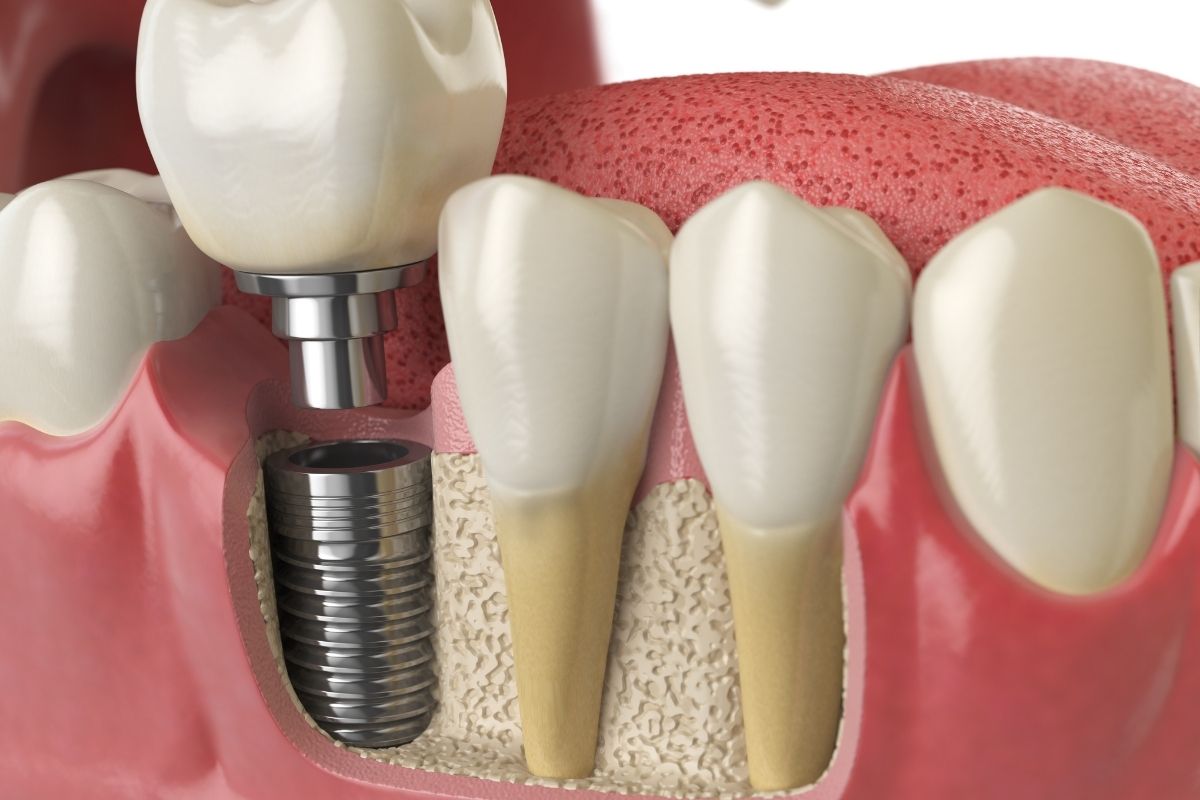
Constructed from biocompatible materials such as titanium, these members are surgically implanted into the jawbone. Once installed, they function like natural tooth roots, stimulating the jawbone with regular pressure from chewing and other activities. Occlusal stimulation helps maintain bone density; as resorption occurs, the facial structure is held.
How Do Dental Implants Stop Bone Loss?
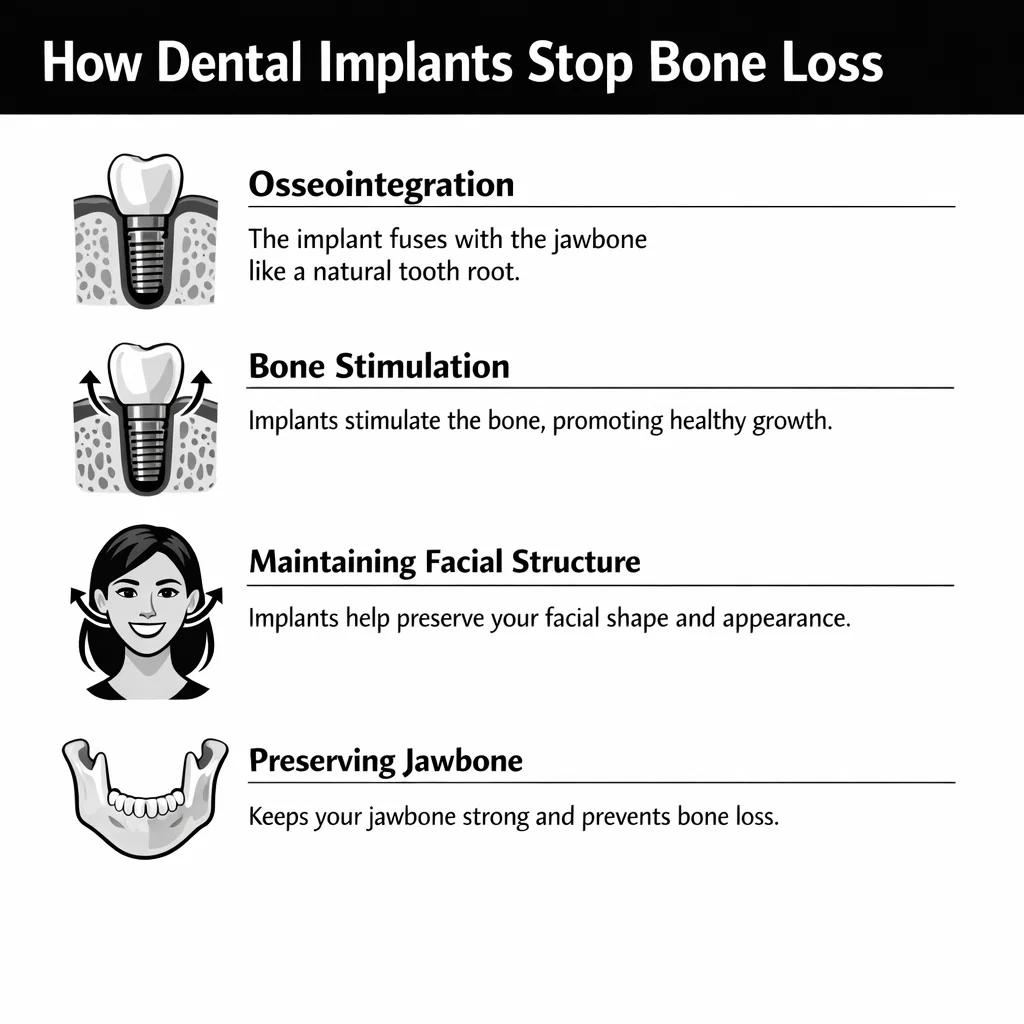
When it comes to dental implants, many know they are a solution for missing teeth, but few consider the importance of jawbone health. Here’s how these prevent bone loss and keep your facial structure in place:
- Osseointegration: The process by which the titanium post of a dental implant fuses with the jawbone, mimicking the integration of a natural tooth root.
- Bone Stimulation: Unlike dentures, which rest on the gums, dental implants are placed directly into the bone, stimulating healthy bone growth and preventing resorption.
- Maintenance of Facial Structure: Implants stimulate bone, helping to maintain bone density and a healthy facial appearance that could otherwise be lost if you don’t have teeth.
- Preserving Jawbone: A healthy jaw helps retain the shape of a smile in the long term, maintaining facial structure and making you look young.
Beyond Bone Preservation: Benefits of Dental Implants
Bone preservation is one of the most important benefits of dental implants, but there are many others as well that should factor into your decision when considering this treatment. These include:
- Long-Lasting: Dental implants are designed to last for many years, typically a lifetime with proper care.
- Enhanced Functionality: Unlike removable dentures, implants give you the full function of your teeth so that you can eat, speak, and smile comfortably.
- Improved Comfort: Unlike dentures, which can slip around or irritate the gums, dental implants are securely placed to ensure a comfortable fit.
- Natural Appearance: Implants are made to blend in with your natural teeth color and shape, rendering them indistinguishable from your other teeth.
Long-Term Effects of Implants on the Face
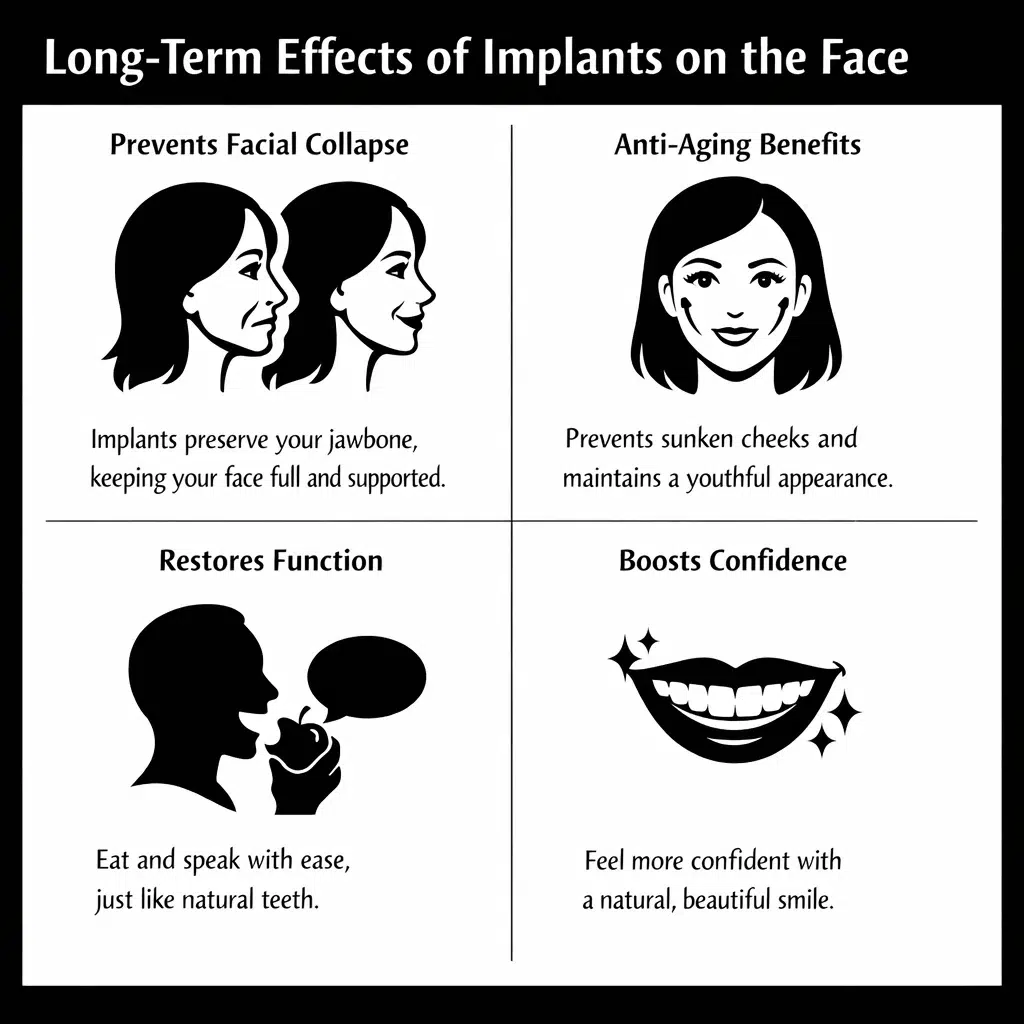
Retaining your jawbone is not only beneficial for your oral health but also for maintaining a youthful look. Dental implants also help maintain your facial structure and confer a long-term aesthetic benefit. Here’s how they affect your looks:
- Avoids the Collapse of Your Face: Without your bones supporting your facial structure, the cheeks begin to collapse, and the jawline disappears. Dental implants keep the facial features looking their best, so you do not have to worry about them shifting around.
- Anti-Aging: Implants help you avoid sunken or hollowness caused by missing teeth, which keeps the bone structure in the footprint and makes you look younger and healthier.
- Restoration: Implants allow you to eat and speak as you would normally; they are aesthetically pleasing and provide significant comfort and confidence.
- Boosts Confidence: Because dental implants give a more stable, natural-looking alternative for lost teeth, loss of confidence in their smile is less likely with this option.
What Happens During the Implant Procedure
The process of getting dental implants involves various stages:
- Consultation and Planning: Your implant dentist will review your mouth, take X-rays, and develop a custom treatment plan. This is to ensure that the implants placed in your mouth will support your facial structure and overall dental health.
- Implant Placement: After careful planning, the implant dentist will surgically place the titanium posts in your jawbone. This procedure is usually performed under local anesthesia, so you will remain comfortable throughout.
- Osseointegration: After implant placement, a healing period is required for the implants to integrate with bone. It may take several months, but it is critical to ensure the implants are secure and stable.
- Placement of Restorations: After the implants have integrated into the bone, your dentist places custom-made crowns, bridges, or dentures on top to complete the restoration.
Restore Your Gums and Maintain Your Jawbone
Dental implants are more than just a solution for missing teeth after tooth and bone loss; they are necessary for preserving your facial structure and oral health. Dental implants are a natural, permanent restoration that supports your jaw and prevents bone loss, enhancing the function of your smile.
At Duo Dental Group Union, we can assist you every step of the way. Our team is dedicated to providing precise treatment, personalized care, and the highest possible success rate for your implant. Contact us today to schedule your consultation if you’re ready to take the next step toward a healthier, more confident smile.
Questions People Ask About Dental Implants
1. How do dental implants prevent bone loss?
Dental implants act like natural tooth roots, providing essential stimulation to the jawbone. This stimulation prevents bone resorption and helps preserve your jaw’s strength, preventing the sunken appearance that can occur after tooth loss.
2. How long do dental implants last?
With proper care, dental implants can last a lifetime. The titanium used in implants is durable and wear-resistant, making it a long-term solution for restoring your smile’s function and appearance.
3. What are the benefits of dental implants over dentures?
Dental implants offer greater stability and comfort than dentures. They integrate with the jawbone, preventing bone loss and providing a more natural look and feel, while dentures can shift or irritate the gums over time.
4. Is the dental implant procedure painful?
The dental implant procedure is typically performed under local anesthesia, so you won’t feel pain during the surgery. Afterward, mild discomfort or swelling may occur, but it can be managed with over-the-counter pain relievers and ice packs.
5. Can anyone get dental implants?
Most people are candidates for dental implants, provided they have enough healthy jawbone to support them. During a consultation, your implant dentist will evaluate your oral health and discuss your suitability for the procedure.
6. How soon can I return to normal activities after getting implants?
You can resume light activities within a few days, but it’s important to avoid strenuous exercises for about two to three weeks. This will ensure proper healing and minimize any complications during the recovery period.


New Patients & Emergency Appointments Welcome!