
Same Day Emergency Appointments Available!

Different Types of Teeth Whitening Treatments Explained
Union, NJ
Have you ever wondered why some people have such bright, white smiles? The secret often lies in teeth whitening treatments. With so many options available, achieving a dazzling smile has never been easier. Whether you’re looking to remove stubborn stains from coffee, wine, or just daily wear, teeth whitening can be the solution. This simple treatment can enhance your smile, making you look younger and feel more confident.
A brighter smile doesn’t just change how you look. It can transform your whole appearance. Feeling self-conscious about yellow or stained teeth can affect your confidence. Fortunately, teeth whitening has become an accessible way to boost both appearance and self-esteem, helping you shine brighter in both personal and professional settings.
Understanding Teeth Whitening
What is Teeth Whitening?
Teeth whitening is a process that lightens the color of your teeth by removing stains and discoloration. Over time, our teeth naturally collect stains from food, drinks, and lifestyle habits. The whitening process works by using bleaching agents that target and break down these stains, restoring a whiter appearance.
There are two primary types of teeth discoloration: extrinsic and intrinsic. Extrinsic stains affect the outer layer of the teeth (enamel) and are usually caused by food, drinks, and smoking. Intrinsic stains, on the other hand, form deeper inside the tooth, often due to aging, trauma, or certain medications.
Who Should Consider Whitening?
Teeth whitening is ideal for individuals who have surface stains or mild discoloration. If you’re someone who enjoys coffee, tea, red wine, or other stain-causing foods, you may be noticing a dullness or yellowing of your teeth. Smokers are also prime candidates for whitening treatments, as tobacco can leave stubborn stains on the teeth.
While most people with healthy teeth are good candidates, those with extreme discoloration or tooth sensitivity should consult with a dentist before starting any whitening treatment. If you have veneers, crowns, or fillings, whitening treatments might not be as effective, so discussing options with your dentist is crucial.
Types of Teeth Whitening Treatments
At-Home Whitening Kits
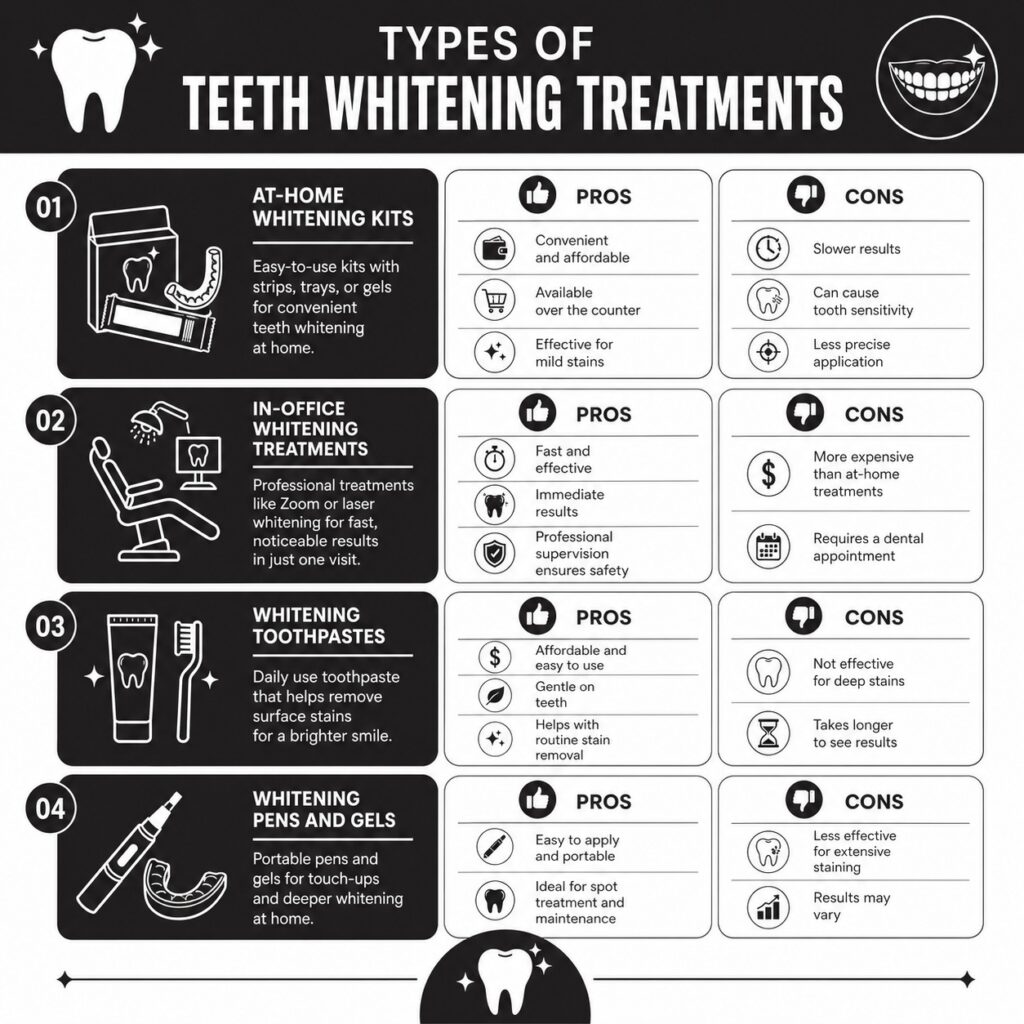
One of the most popular options for whitening is using at-home kits. These typically include whitening strips, trays, or gels that you apply yourself. Many people prefer these kits due to their convenience and affordability. However, while they’re easy to use, they can take longer to produce results, and the whitening may not be as dramatic as professional treatments.
Pros:
- Convenient and affordable
- Available over the counter
- Effective for mild stains
Cons:
- Slower results
- Can cause tooth sensitivity
- Less precise application
In-Office Whitening Treatments
In-office treatments, such as Zoom Whitening or laser whitening, are professionally done by dentists and offer the fastest and most noticeable results. During an in-office whitening session, your dentist will apply a highly concentrated bleaching agent to your teeth and may use light or heat to accelerate the whitening process. These treatments can lighten your teeth several shades in just one visit, making them an ideal choice for those looking for quick, noticeable results.
Pros:
- Fast and effective
- Immediate results
- Professional supervision ensures safety
Cons:
- More expensive than at-home treatments
- Requires a dental appointment
Whitening Toothpastes
Whitening toothpastes are an easy, no-fuss solution for those looking to maintain a brighter smile. These toothpastes contain mild abrasives that help scrub away surface stains as you brush. While whitening toothpastes can be effective for minor stains, they don’t offer significant results for deeper discoloration.
Pros:
- Affordable and easy to use
- Gentle on teeth
- Helps with routine stain removal
Cons:
- Not effective for deep stains
- Takes longer to see results
Whitening Pens and Gels
Whitening pens are a convenient option for touch-ups on the go. These small, portable pens contain a whitening gel that you apply directly to your teeth. They’re perfect for maintaining your whitening results between professional treatments. Whitening gels, often used with trays, are another option that provides a deeper whitening effect at home.
Pros:
- Easy to apply and portable
- Ideal for spot treatment and maintenance
Cons:
- Less effective for extensive staining
- Results may vary
Comparing Different Whitening Options
Cost
When comparing the cost of teeth whitening, there’s a clear distinction between at-home kits and professional in-office treatments. At-home whitening kits are typically the more budget-friendly option, with prices ranging from $20 to $100 depending on the brand and type of kit. These kits often include whitening strips, gels, or trays and are widely available over-the-counter.
In contrast, professional in-office treatments, such as Zoom! Whitening or laser whitening, are a more significant investment. The cost for these treatments typically ranges from $300 to $1,000 per session, depending on the complexity and the technology used. While more expensive, these treatments offer quicker and more dramatic results.
Duration of Results
The longevity of your whitening results depends largely on the type of treatment you choose. In-office treatments provide immediate and longer-lasting results, often lasting up to a year or more with proper care. However, the effects may start to fade over time, especially if you consume stain-causing foods and drinks or smoke.
At-home whitening kits generally offer more temporary results. Depending on the type of kit, the effects can last anywhere from a few weeks to a few months. Regular touch-ups may be necessary to maintain the bright smile, but they are more cost-effective for long-term use.
Effectiveness
In-office whitening treatments are the most effective option for stubborn stains and significant discoloration. These treatments use stronger whitening agents and are applied under professional supervision, ensuring they tackle even deep-set stains caused by aging, smoking, or certain foods.
For routine maintenance or mild staining, at-home whitening kits can be highly effective. Whitening toothpastes and gels are good options for keeping your smile bright between professional treatments. However, they may not provide the same dramatic results for more severe discoloration.
Ultimately, the best option for you depends on your specific needs and budget. For fast, long-lasting results, professional treatments are ideal, while at-home kits offer a more affordable and convenient solution for minor maintenance.
Safety and Risks of Teeth Whitening
Potential Side Effects
While teeth whitening treatments are generally safe, some people may experience side effects, including tooth sensitivity and gum irritation. The bleaching agents used in these treatments can cause temporary discomfort, especially for those with sensitive teeth or gums.
How to Minimize Risks
To minimize side effects, it’s important to follow all instructions carefully. Using desensitizing toothpaste before and after treatment can help reduce sensitivity. If you experience discomfort or irritation, it’s best to consult with your dentist to adjust the treatment. Always ensure that professional treatments are administered by a trained dentist to avoid unnecessary risks.
How to Maintain Whitened Teeth
Maintaining your bright smile after teeth whitening in Union is key to ensuring long-lasting results. Avoid consuming foods and drinks that cause stains, such as coffee, wine, and dark-colored sodas. If you do indulge, try rinsing your mouth with water afterward to help reduce staining.
Regular dental cleanings are also essential to maintaining your whitened teeth. In addition, practicing good oral hygiene with brushing, flossing, and using whitening toothpaste can help prolong the effects of your treatment. A good oral care routine will keep your teeth healthy and bright for years to come.
In conclusion, teeth whitening offers a range of options to suit different needs, from at-home kits to professional in-office treatments. Whether you’re looking for a quick fix or a long-term solution, it’s important to choose the right option for your lifestyle and dental needs. At Duo Dental Group Union, we can help guide you through the best whitening treatments for your smile.
If you’re ready to enhance your smile with professional teeth whitening, schedule a consultation with our team today. Let us help you achieve the bright, beautiful smile you deserve!
What People Ask
How long do whitening results last?
Results can last anywhere from a few months to over a year, depending on the treatment type and how well you maintain your oral care.
Can whitening remove all stains?
Whitening can effectively remove surface stains, but deeper stains or those caused by medication may require professional treatment for the best results.
How often should I whiten my teeth?
For at-home kits, whitening every few months is ideal. In-office treatments can be repeated once or twice a year, depending on your needs.
Can whitening cause tooth sensitivity?
Some people experience temporary tooth sensitivity after whitening, but it usually fades within a day or two.
Is teeth whitening recommended for everyone?
Not everyone is a good candidate for teeth whitening. Those with sensitive teeth, gum disease, or certain dental conditions should consult with a dentist before starting treatment.


New Patients & Emergency Appointments Welcome!