
Same Day Emergency Appointments Available!

How Dentures Restore Bite Function and Make Meals Comfortable
Union, NJ
Losing teeth can make something as simple as eating feel frustrating. Chewing becomes uneven, certain foods are avoided, and meals may no longer feel enjoyable. For many patients in Union, NJ, dentures offer a dependable way to restore bite function and bring comfort back to everyday eating.
At Duo Dental Group, patients often share how tooth loss has impacted their confidence and diet. The good news is that well-fitted dentures can help you regain control over how you chew, speak, and enjoy food again—without constant discomfort.
Why Bite Function Matters for Daily Living
Your bite (also called occlusion) plays a critical role in how your teeth come together when you chew. When teeth are missing, this balance is disrupted. As a result, you may experience:
- Difficulty chewing tougher or fibrous foods
- Uneven pressure on remaining teeth
- Jaw discomfort or strain
- Avoidance of certain foods altogether
Over time, this can affect nutrition, digestion, and overall quality of life. Restoring bite function isn’t just about appearance—it’s about making meals practical and enjoyable again.
How Dentures Help Restore Proper Chewing Ability
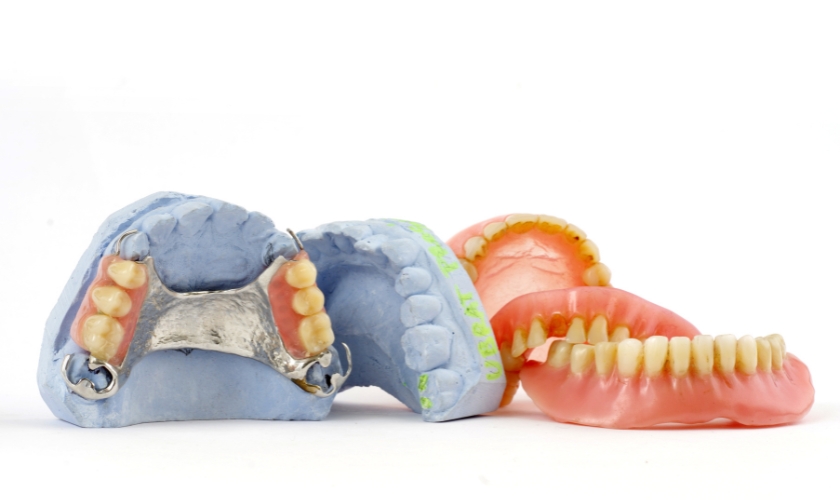
Dentures are custom-made replacements designed to mimic the function of natural teeth. Whether full or partial, they are carefully crafted to align with your mouth structure and help distribute chewing forces evenly.
Here’s how they make a difference:
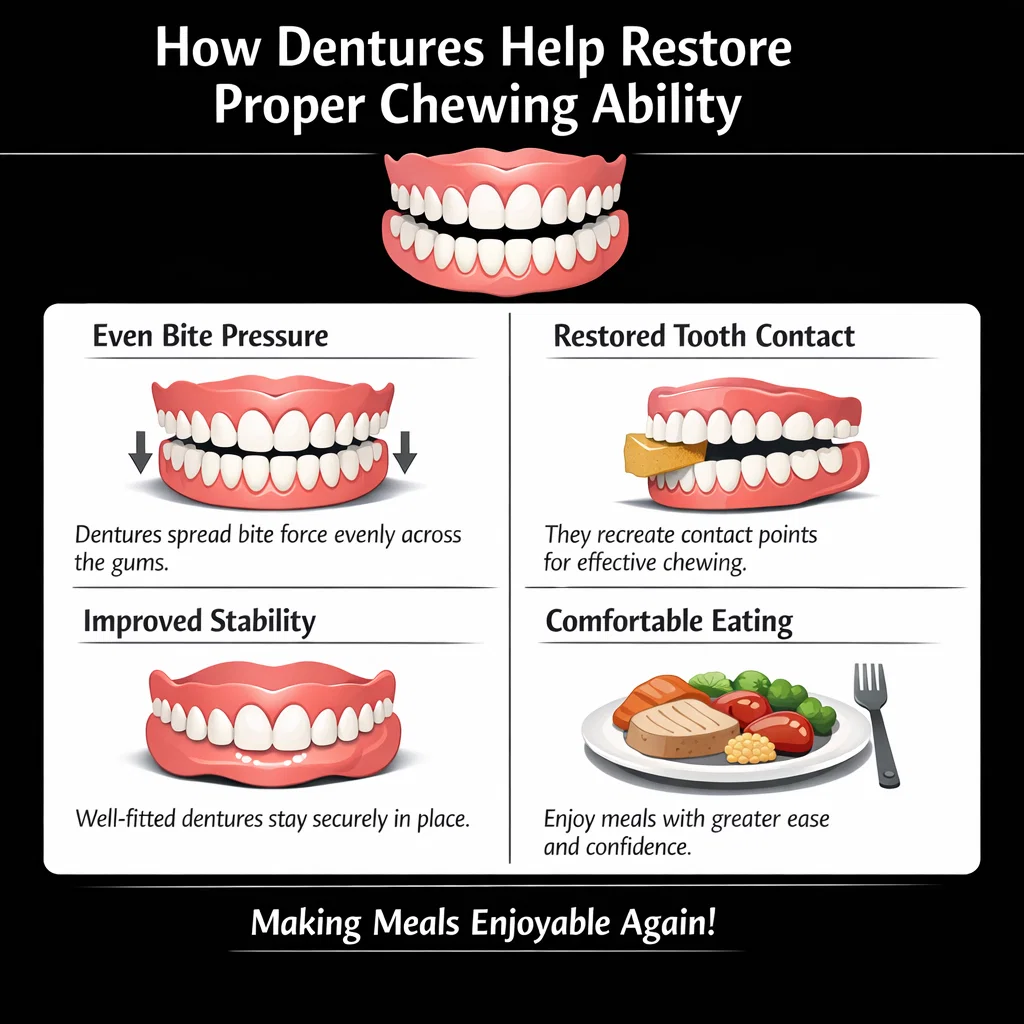
1. Even Distribution of Bite Pressure
Dentures help spread chewing pressure across the gums and underlying bone, reducing strain on any one area. This allows for more balanced and stable chewing.
2. Recreating Tooth Contact
When teeth are missing, food can be difficult to break down. Dentures restore contact points between upper and lower arches, making it easier to bite into and chew a variety of foods.
3. Improved Stability with Proper Fit
Modern dentures are designed to fit securely. With proper adjustments, they stay in place during chewing, helping patients feel more confident while eating.
Making Meals More Comfortable with Dentures
One of the most noticeable benefits patients report is improved comfort during meals. With the right denture fit and a short adjustment period, eating becomes less stressful and more natural.
Benefits include:
- Ability to enjoy a wider variety of foods
- Reduced gum irritation when dentures are well-fitted
- Less jaw fatigue during meals
- More consistent chewing patterns
At Duo Dental Group in Union, personalized adjustments are often made to ensure dentures feel as natural as possible, especially during the early adaptation phase.
What to Expect When Adjusting to Dentures
Adapting to dentures takes time, especially if you’ve recently had teeth extracted or are wearing dentures for the first time. Here are a few common experiences:
- Mild soreness during the initial days
- Slight changes in speech patterns
- Learning to chew on both sides of the mouth
- Gradual improvement in comfort and control
Most patients begin to feel more comfortable within a few weeks. Regular follow-ups can help fine-tune the fit and address any discomfort.
Tips to Improve Eating Comfort with Dentures
To make the transition smoother, consider the following practical tips:
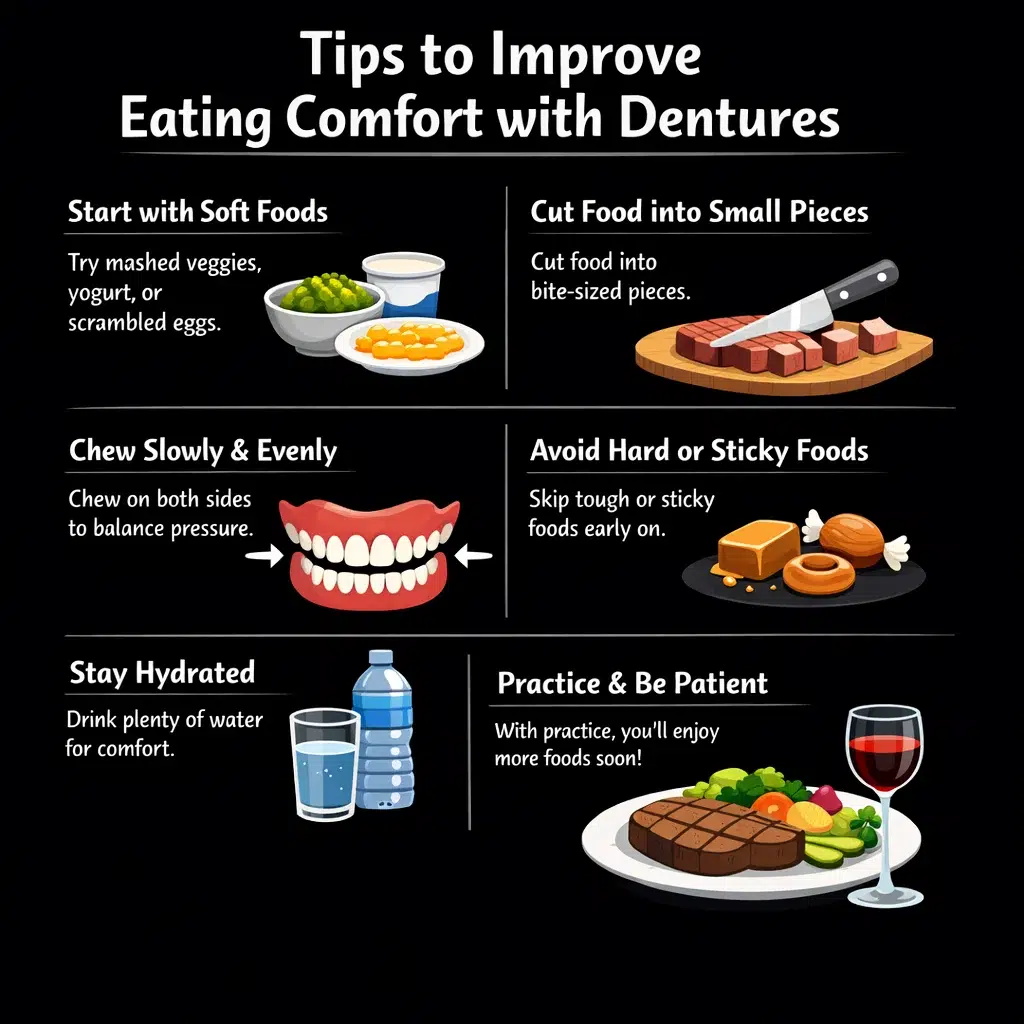
- Start with soft foods such as mashed vegetables, yogurt, or scrambled eggs
- Cut food into smaller pieces to reduce strain
- Chew slowly and evenly on both sides
- Avoid very sticky or hard foods at first
- Stay hydrated to support oral comfort
With time and practice, many patients return to enjoying a wide range of meals confidently.
When to Consider Dentures
Dentures may be recommended if you are experiencing:
- Multiple missing teeth
- Difficulty chewing certain foods
- Shifting of remaining teeth
- Jaw discomfort due to uneven bite
- Changes in facial appearance due to tooth loss
A dental evaluation can determine whether full dentures, partial dentures, or implant-supported options are best suited for your needs.
Why Professional Fitting Matters
Not all dentures are the same. A properly fitted denture can significantly improve comfort, stability, and chewing efficiency. Poorly fitted dentures, on the other hand, may lead to irritation or difficulty eating.
At Duo Dental Group, dentures are designed with attention to:
- Bite alignment
- Gum contour and support
- Patient comfort and speech
- Long-term usability and adjustments
Regular checkups ensure that your dentures continue to function effectively as your mouth naturally changes over time.
Take the Next Step Toward Comfortable Eating
If missing teeth are making meals difficult or uncomfortable, dentures may be the solution you’ve been looking for. Restoring your bite function can improve not just how you eat, but how you feel every day.
Duo Dental Group in Union, NJ is here to help you explore your options and find a denture solution that fits your needs and lifestyle. A personalized consultation can guide you toward a more comfortable, confident way of eating and living.
Book an appointment today to take the first step toward restoring your bite and enjoying meals again without hesitation.
FAQs About Dentures and Bite Function
1. Will dentures fully restore my ability to chew?
Dentures significantly improve chewing ability, though it may take time to adjust. Most patients regain the ability to enjoy a wide variety of foods with proper fit and practice.
2. How long does it take to get used to dentures?
Adjustment periods vary, but many patients begin feeling comfortable within a few weeks. Minor soreness or speech changes are normal initially.
3. Can I eat all types of food with dentures?
You can enjoy most foods, though extremely hard, sticky, or chewy items may require caution. Over time, many patients expand their diet comfortably.
4. What if my dentures feel loose while eating?
Loose dentures can affect bite function. This may indicate the need for an adjustment, reline, or replacement. A dental visit can resolve this issue.
5. Do dentures improve speech as well?
Yes. Missing teeth can affect pronunciation, and dentures help restore clarity in speech once you adjust to wearing them.
Related Articles
New Patients & Emergency Appointments Welcome!