
Same Day Emergency Appointments Available!

Dental Implants for Seniors: Improving Quality of Life
Union, NJ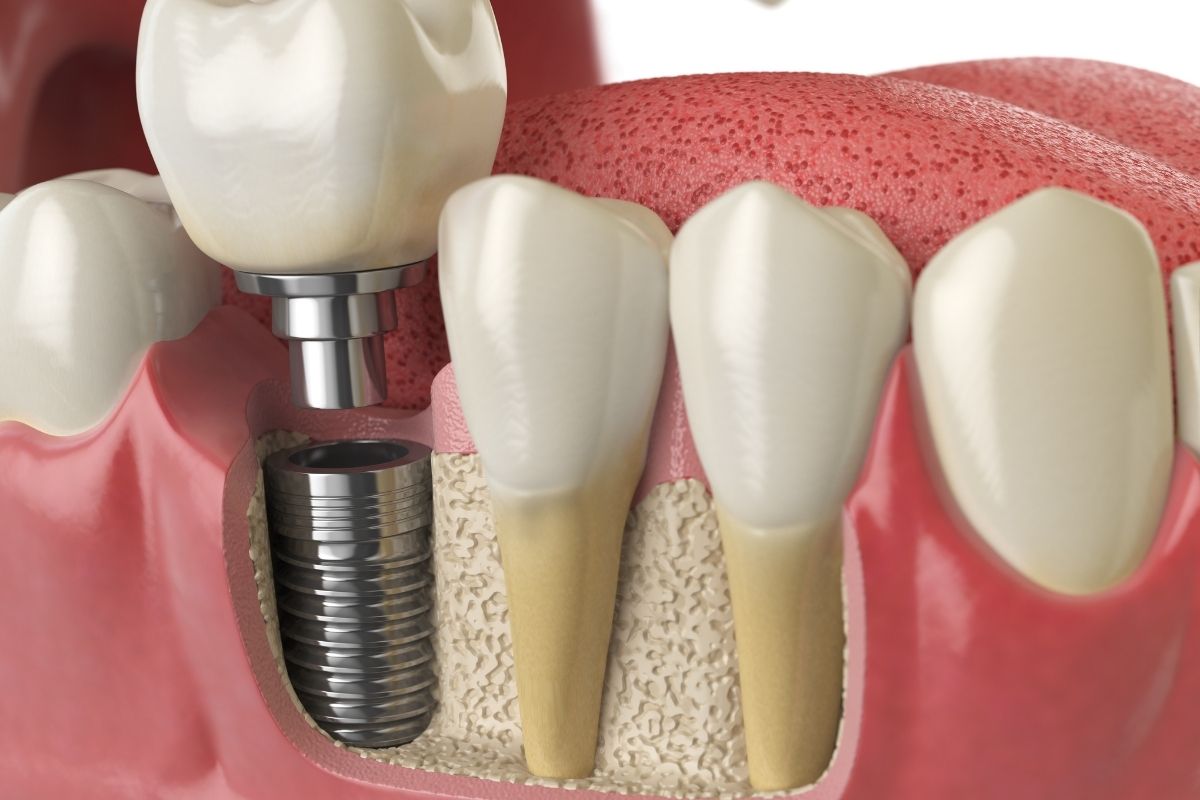
Growing older often brings wisdom, experience, and a deeper appreciation for everyday moments. Yet for many seniors, tooth loss can quietly change how they live those moments. Eating favorite foods becomes difficult, conversations feel less comfortable, and smiling in photos with family may bring hesitation instead of confidence.
Missing teeth affects more than appearance. They can influence how clearly someone speaks, how well they chew, and even how they feel about social situations. Traditional dentures have helped many people over the years, but they sometimes move, slip, or feel uncomfortable during daily activities.
Today, modern tooth replacement solutions offer seniors a different experience. Many older adults are discovering how dental implants can restore stability, function, and confidence. This article explores why tooth loss happens with age, how implant-supported teeth work, and how they help seniors enjoy everyday life again.
Why Tooth Loss Becomes More Common with Age
Tooth loss does not happen suddenly. It usually develops gradually over time due to several oral health factors that become more common later in life.
One of the leading causes is gum disease. When plaque builds up around the gums for many years, it can cause inflammation that weakens the tissues supporting teeth. As gum disease progresses, the bone around the teeth may deteriorate, eventually leading to tooth loss if left untreated.
Tooth decay also contributes to this problem. Over time, repeated exposure to sugar, acids, and bacteria can damage enamel and create cavities. When decay reaches the inner structure of a tooth, the damage may become too extensive to restore.
Natural wear and tear also play a role. Teeth experience decades of chewing, grinding, and pressure. Small cracks or fractures can develop, making them more vulnerable to damage.
Bone loss in the jaw is another important factor. When teeth are missing for a long time, the jawbone may shrink because it no longer receives stimulation from natural tooth roots.
Certain medical conditions can influence oral health as well. Diabetes, osteoporosis, and medications that reduce saliva can increase the risk of gum problems and decay.
Because of these combined factors, many older adults eventually explore restorative solutions such as dental implants to regain stability and comfort.
What Implant-Supported Teeth Are and How They Work
Modern implant-supported restorations are designed to mimic the structure of natural teeth. Instead of simply resting on the gums like traditional dentures, they connect directly with the jawbone.
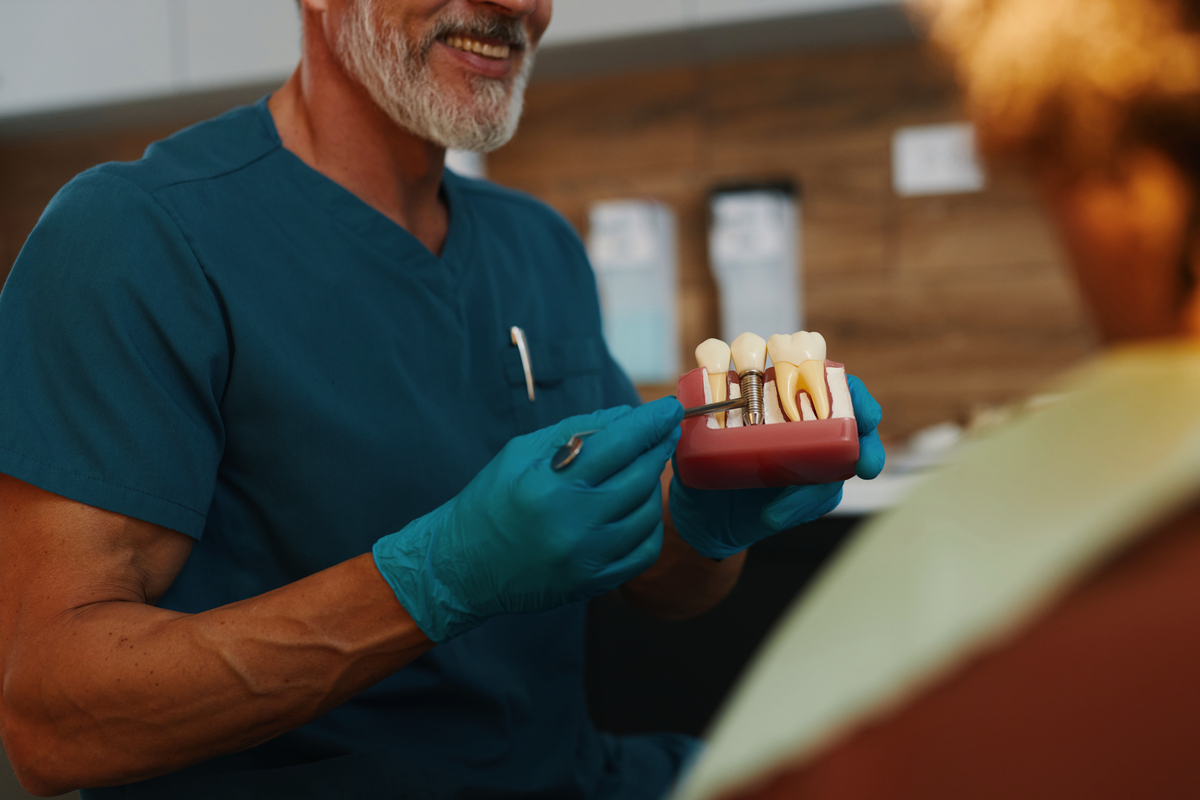
The system typically includes three main components.
First is the titanium implant post. This small metal structure is carefully placed within the jawbone. Titanium is commonly used because it is strong and integrates well with human bone.
Second is the abutment. This connector sits on top of the implant and serves as the base that supports the visible restoration.
Finally, the restoration itself is attached. Depending on the patient’s needs, this may be a single crown, a bridge replacing several teeth, or a full arch denture supported by implants.
After placement, the implant gradually bonds with the surrounding bone in a process called osseointegration. This biological connection allows the implant to function much like a natural tooth root.
Because of this integration, implant-supported teeth provide stability that helps patients chew comfortably and maintain jawbone strength. Many seniors appreciate that these restorations feel more secure than removable dentures.
How Implant-Supported Teeth Improve Daily Life
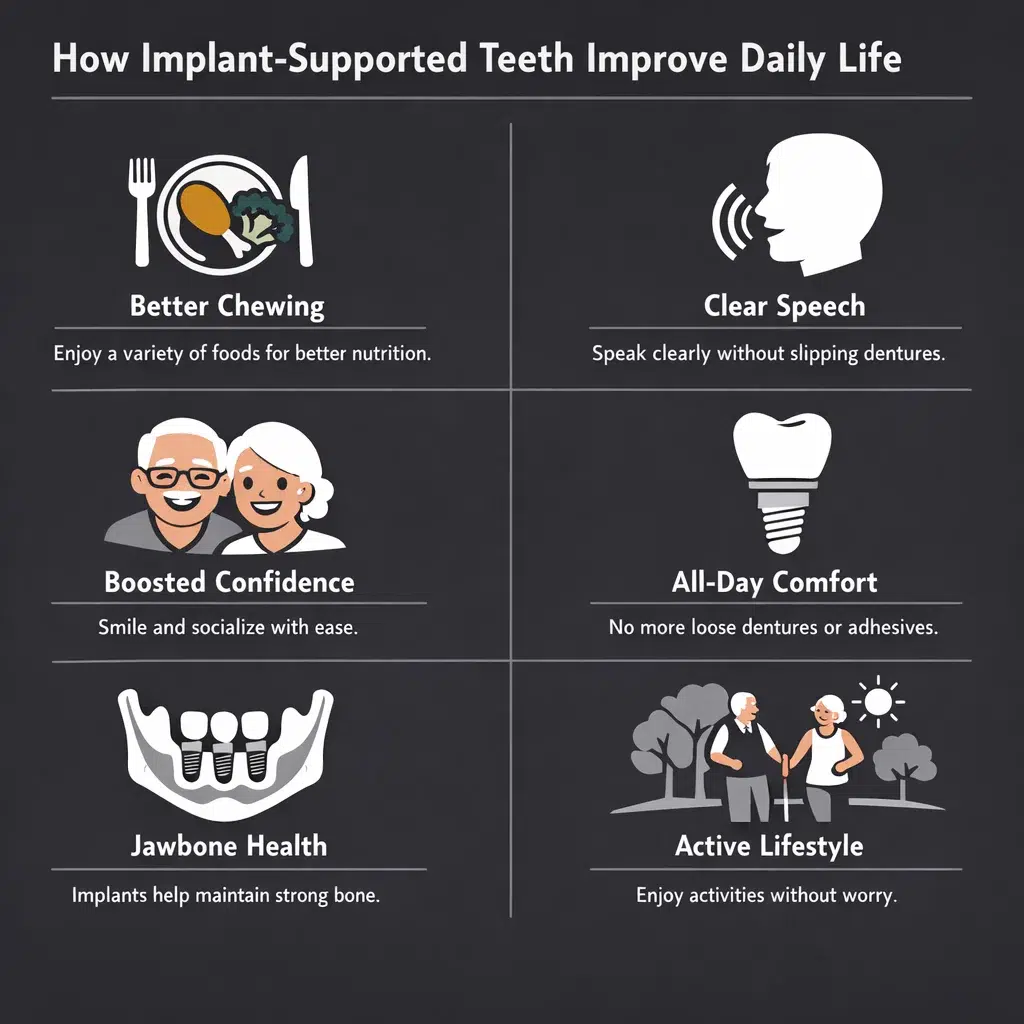
The benefits of implant-supported restorations extend beyond appearance. For many seniors, restoring a sense of normalcy to daily routines.
One of the most noticeable improvements is chewing ability. Stable teeth allow seniors to enjoy a wider range of foods, from crisp vegetables to hearty meals. This variety supports better nutrition and overall wellness.
Speech also becomes clearer. When dentures shift during conversation, it can cause embarrassment or difficulty pronouncing certain words. Implant-supported teeth remain stable, allowing seniors to speak naturally.
Confidence often improves as well. Many seniors feel more comfortable smiling, laughing, and participating in social activities when their teeth look natural and secure.
Comfort is another major advantage. Unlike removable dentures, implants do not rely on adhesives or suction against the gums. This eliminates the frustration of slipping appliances during meals or conversations.
Another benefit involves jawbone health. When a tooth is missing, the bone beneath it can shrink over time. Implants stimulate the bone similarly to natural roots, helping preserve facial structure and oral stability.
For seniors who enjoy community activities around Union, from walking through Kawameeh Park to dining with family at neighborhood restaurants, having stable teeth can make those experiences more enjoyable.
Implant-Supported Teeth Compared With Traditional Dentures
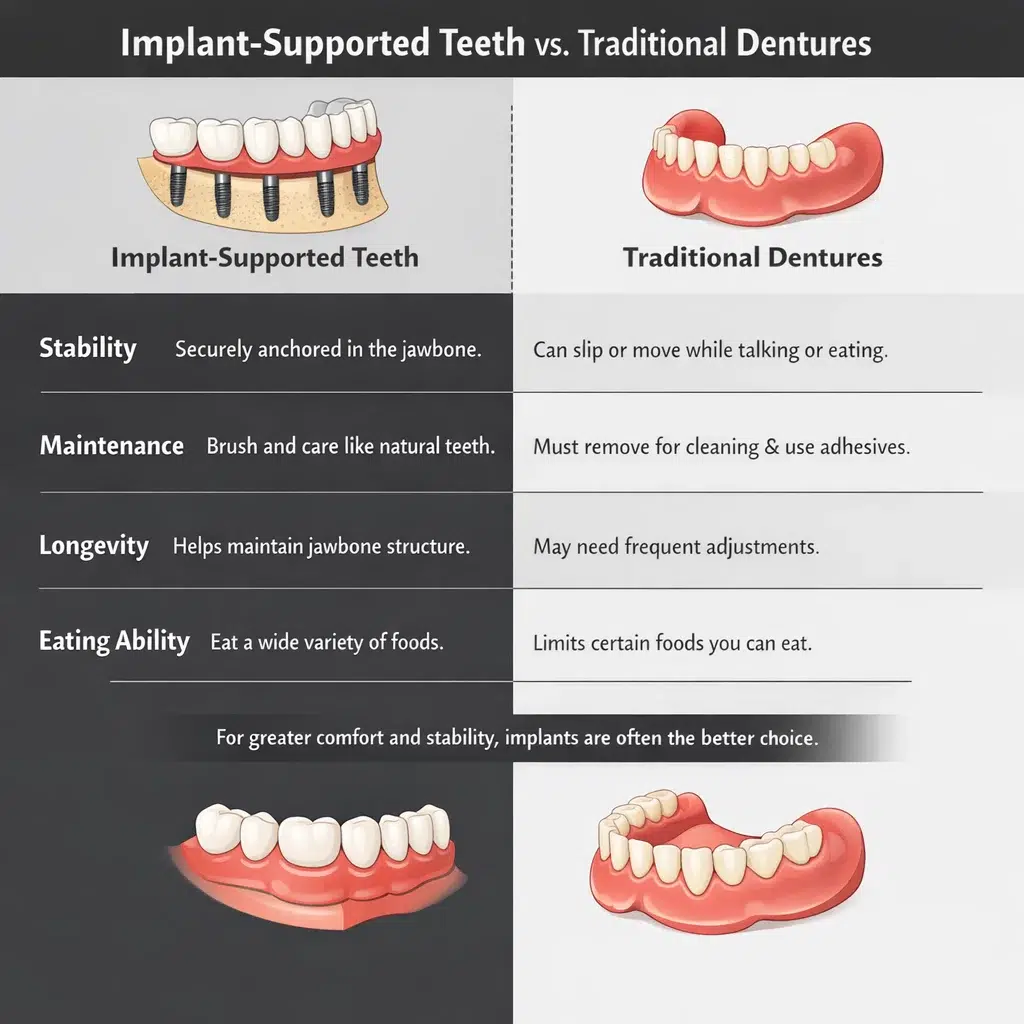
Many seniors want to understand how implant-supported restorations differ from traditional dentures.
Stability is often the biggest difference. Dentures rest on the gums and may shift during chewing or speaking. Implant-supported teeth remain anchored within the jawbone, creating a secure fit.
Maintenance also varies. Dentures must be removed for cleaning and often require adhesives. Implant-supported restorations are cleaned similarly to natural teeth, with regular brushing and professional care.
Longevity is another consideration. Dentures may need adjustments as the jawbone changes shape over time. Because implants stimulate the bone, they help maintain jaw structure and provide long-term stability.
Eating ability can also differ significantly. Dentures sometimes limit the types of food people feel comfortable eating. Implant-supported teeth allow many patients to return to a more varied diet.
For seniors seeking stability and comfort, implant-based solutions often provide a noticeable improvement in everyday life.
Are Seniors Good Candidates for Implant Treatment?
A common misconception is that older adults are not eligible for implant treatment. In reality, age alone rarely determines candidacy.
Dental professionals focus more on overall health than on a specific age range. Many people in their seventies or eighties successfully receive implants.
Several factors are typically evaluated during a consultation. Bone density is important because the implant must be supported by a healthy jawbone. Gum health is also assessed to ensure the surrounding tissues can support healing.
Medical history plays a role as well. Certain conditions or medications may influence healing time, and dentists consider these factors when planning treatment.
Lifestyle habits such as smoking can affect implant success, so dentists may discuss strategies to improve outcomes.
With modern imaging and planning technology, many seniors who once believed they had limited options now discover they are candidates for dental implants in Union.
What the Treatment Process Looks Like
The implant process begins with a thorough consultation. During this visit, the dental team performs an oral examination and uses digital imaging to evaluate bone structure and plan the procedure.
Once planning is complete, the implant post is placed within the jawbone during a minor surgical procedure. Most patients report that the process is comfortable and manageable with modern techniques.
After placement, the healing phase begins. Over several months, the implant integrates with the surrounding bone, forming a stable foundation.
Once healing is complete, the final restoration is attached. This may be a crown replacing a single tooth, a bridge supporting several teeth, or a denture anchored by implants.
At Duo Dental Group Union, careful planning and modern technology help ensure that every stage of treatment supports long-term stability and comfort.
Helpful Tips for Seniors Considering Implant Treatment
If you are thinking about implant-supported teeth, a few steps can help prepare you for the process.
Start by scheduling a detailed consultation with a dental professional who offers implant treatment. A personalized evaluation helps determine whether the procedure fits your needs.
Maintaining healthy gums before treatment is also important. Good oral hygiene helps create a stable environment for healing.
Be sure to discuss your medical history and medications during the consultation. This information helps the dental team design a safe treatment plan.
Following post-treatment instructions carefully supports proper healing. This may include dietary recommendations and gentle cleaning routines.
Finally, continue visiting your dental office for routine checkups. Professional care helps maintain both implants and natural teeth.
Life After Treatment
Once healing is complete, many seniors find that their daily routine becomes simpler again.
Implant-supported teeth are cared for much like natural teeth. Regular brushing, flossing, and dental checkups help maintain oral health.
Because implants remain stable, patients often notice improved comfort while eating and speaking. Many seniors report feeling more confident during social activities, family gatherings, and community events.
Simple pleasures, such as sharing a meal, smiling in photos, or laughing with grandchildren, become easier when teeth feel secure.
A Renewed Sense of Comfort and Confidence
Tooth loss does not have to limit comfort or independence during the later stages of life. Modern restorative solutions allow many seniors to regain stability and function.
With implant-supported teeth, eating, speaking, and smiling can feel natural again. Many older adults discover a renewed sense of confidence and enjoyment in everyday activities.
If you or a loved one is exploring options for replacing missing teeth, consider scheduling a consultation with Duo Dental Group Union. A personalized evaluation can help determine whether implant treatment is the right step toward restoring comfort and quality of life.
People Also Ask
How long do dental implants last for older adults?
Implants are designed to last many years with proper care. Maintaining good oral hygiene and attending regular dental checkups helps ensure long-term stability and performance.
Is implant placement painful for seniors?
The procedure is typically performed with local anesthesia, making it comfortable for most patients. Mild soreness may occur afterward, but usually improves within a few days.
How long does it take to recover after implant surgery?
Initial healing usually takes a few days to a week, while the implant bonds with the jawbone over several months before the final restoration is placed.
Can seniors with dentures switch to implants?
Yes. Many people who wear traditional dentures choose implant-supported solutions for improved stability, comfort, and chewing ability.
What foods can seniors eat after implant treatment?
During early healing, soft foods are recommended. Once healing is complete, most patients can comfortably enjoy a wider variety of foods.

New Patients & Emergency Appointments Welcome!